
Solar Farming Edition
From smart farms to key facilities,
connecting technology and energy as one.
Farming Korea is an integrated PMO connecting Korea's cultivation, environment, water, lighting, automation, AI and energy technologies into one system. Building on that smart farm PMO, SOLAR FARMING EDITION adds high-efficiency solar, energy management and local operation solutions — managing design, supply, construction and operation for the climates and facility demands of Ukraine, the Middle East and Central Asia.
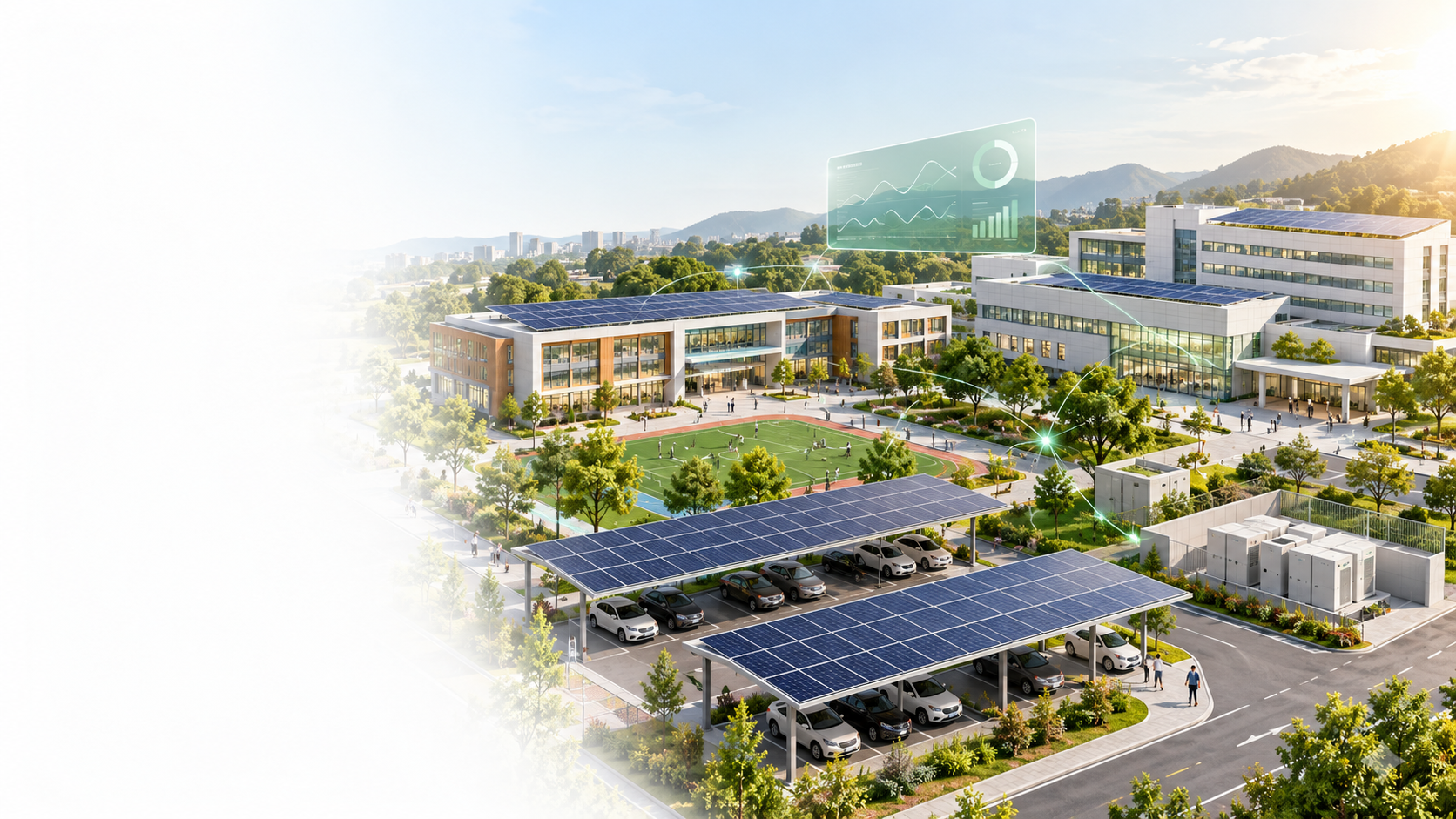
AI-generated application concept — not a completed project record.
02Smart Farm PMO
One PMO integrating cultivation to operation
Farming Korea's smart farm PMO integrates cultivation, environment, water, lighting, automation and AI from design through construction and operation. SOLAR FARMING EDITION is the specialised business within it, responsible for solar generation, storage and energy management.
Smart farm PMO in detail: K-AI SMART FARM PMO →
03Application Areas
Completing smart farm energy, expanding to facilities
01
Solar Smart Farm
What we provide: Integration of solar, ESS and EMS with cultivation facilities
Connection to existing business: Connected to the existing smart farm PMO and AI FARM BRAIN
02
Schools · Hospitals · Key facilities
What we provide: High-efficiency solar, integrated management and local maintenance
Connection to existing business: Extending the energy integration capability required by smart farms into the facility sector
04Solar Smart Farm
Every farm function connected to energy
AI FARM BRAIN manages the crops and farm operation, the EMS manages power operation, and the Farming Korea PMO coordinates the connection and responsibilities between the two systems. The actual scope of automatic control is finalised through product compatibility checks and field pilots.
Aero · Hydroponic cultivation
Critical power continuity plan for pumps, nutrient supply and controllers
Environment · HVAC
Heating, cooling and ventilation demand linked with generation and storage operation
Lighting
Power use coordinated within the range that keeps crop growing conditions
Water · Treatment
Operating hours and power demand management for irrigation, pumping and purification
Automation · Robotics · Cold chain
Work and cold-storage loads connected to energy operation
AI FARM BRAIN
Integrates growth, environment and operation data
ENERGY EMS
Manages generation, storage and consumption data and links with the farm control system
05Schools · Hospitals · Key Facilities
Energy operation tailored to each facility
We first define each facility's usage patterns, critical loads and operational responsibility. Performance, operation and total cost are compared on the same basis, and supply scope and management terms are fixed according to pilot results.
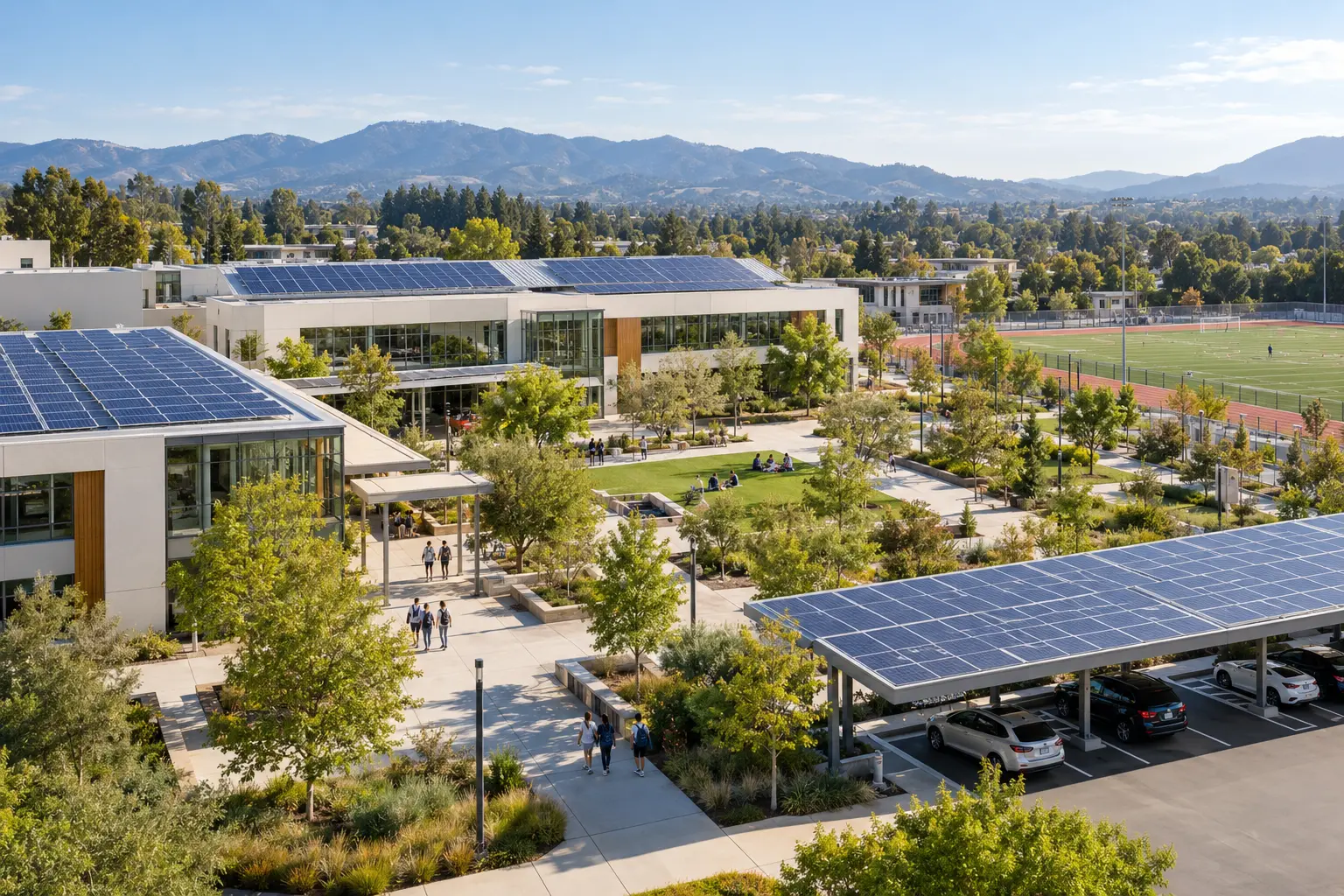
Schools · Universities · Education
Classify power use across classrooms, cafeterias, HVAC, dormitories and education IT, and align generation with consumption around operating hours.
- Rooftop, parking-lot and site utilisation review
- Semester, vacation and weekend load pattern analysis
- Integrated dashboard for facility managers
- Pilot metrics: self-consumption, peak power, operating cost
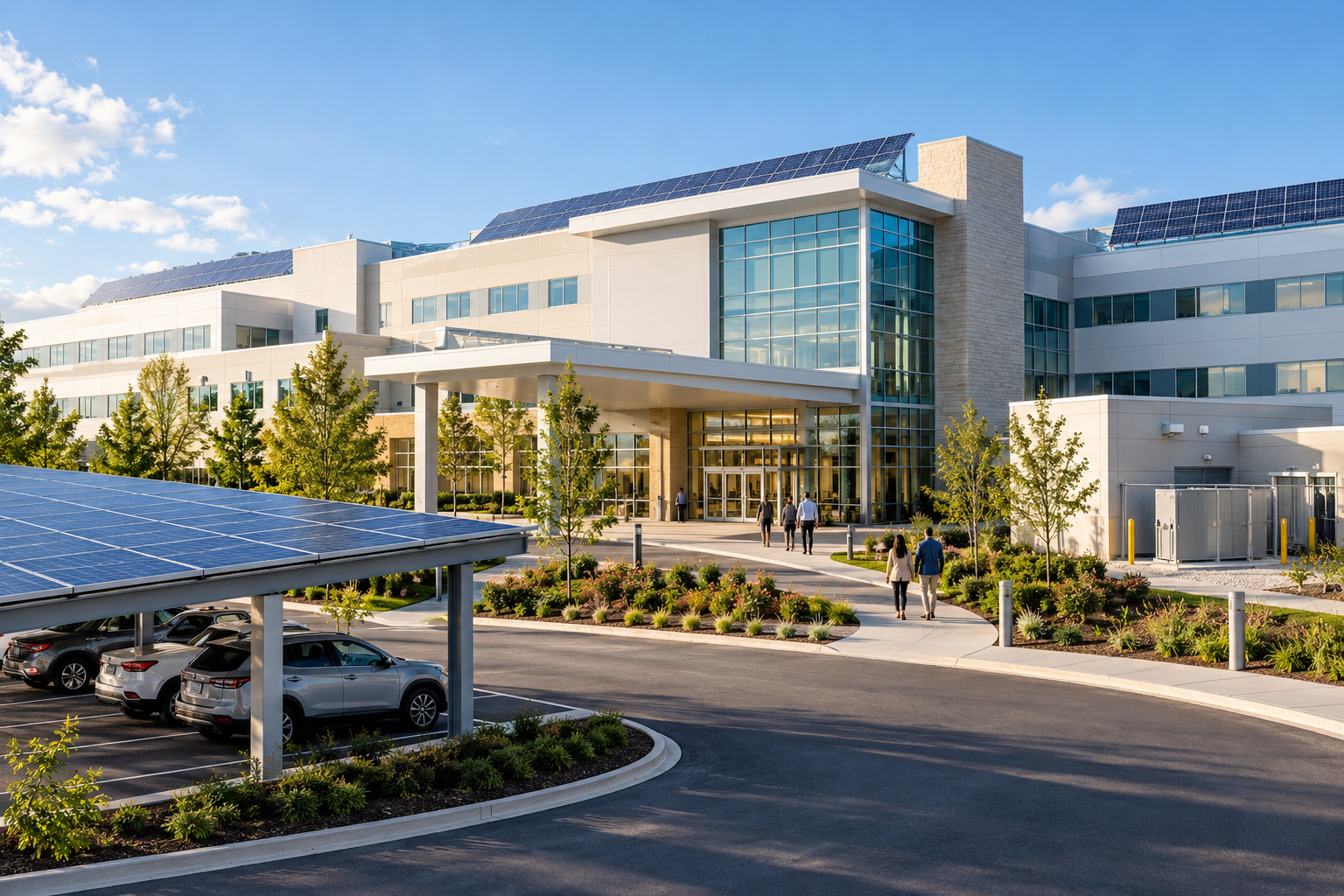
Hospitals · Medical facilities
Separate general facility power from critical power for care and life safety, and design the interface with existing emergency power systems.
- Priority analysis of HVAC, hot water and administrative loads
- UPS, generator and transfer/protection coordination review
- Construction and maintenance plans that minimise downtime
- Pilot metrics: per-load availability, recovery time, power quality
Public · Key operating facilities
Identify the core functions and power demand to maintain across public offices, shelters, water and sewage, communications and cold chain facilities.
- Define critical loads and required uptime per facility
- Integrated monitoring across multiple sites
- Local dispatch, spare parts and recovery system
- Pilot metrics: critical-load uptime, fault response, total cost
Target facilities are sales and pilot proposals. Hospital UPS and life-safety requirements must go through professional design, approval and testing under local regulations and facility design standards; solar and ESS adoption alone does not guarantee compliance.
06Common PMO Process
The same process for farms and facilities
- Demand & load analysis
- Technology selection
- Integrated design
- Supply & construction
- Acceptance & training
- Management & maintenance
07Korean Technology · Overseas Execution
Korean technology connected to local delivery
High-efficiency module, EMS, management solution and ESS candidates are connected by role, working with local construction and operation partners in Ukraine, the Middle East and Central Asia. Candidate companies are contacts verified through official materials — not confirmed partners.
Farming Korea PMO
Demand discovery, technology selection, standard design, partner coordination, schedule, cost, quality and operational performance management.
Korean technology companies
Products, core technology, supply warranty, design support, technical training, equipment and software support.
Local delivery partners
Sites, permits, local design, construction, customs, commissioning, maintenance and field response.
Role-based candidate list: Technology Partners →
08Comparison & Verification
Compared on the same basis, confirmed by results
Until field verification, performance rankings, savings rates and payback periods are not shown as fixed values. Per-facility baseline data and pilot results are recorded together.
High-efficiency equipment
Metrics: Module efficiency, temperature coefficient, yield per area, degradation
Evidence: Datasheets, test reports, site-based yield analysis
Comparison planned
Energy operation
Metrics: Self-consumption, peak power, power quality, critical-load uptime
Evidence: Hourly metering, load classification, grid/backup transfer tests
Site survey required
Systematic management
Metrics: Data collection rate, alert delivery, action history, fault response time
Evidence: API integration tests, inspection records, SLA, local service plan
Integration & service under discussion
Total cost
Metrics: Installation, operation, licensing, replacement, spare parts
Evidence: Same-scope quotes, warranty terms, tariff/load and lifetime assumptions
Calculated after terms are fixed
09Operation & Maintenance
Post-installation management is part of the design
Management must extend beyond dashboards to inspection, action, reporting and field response. Actual scope and performance are fixed by contract after products and operators are selected.
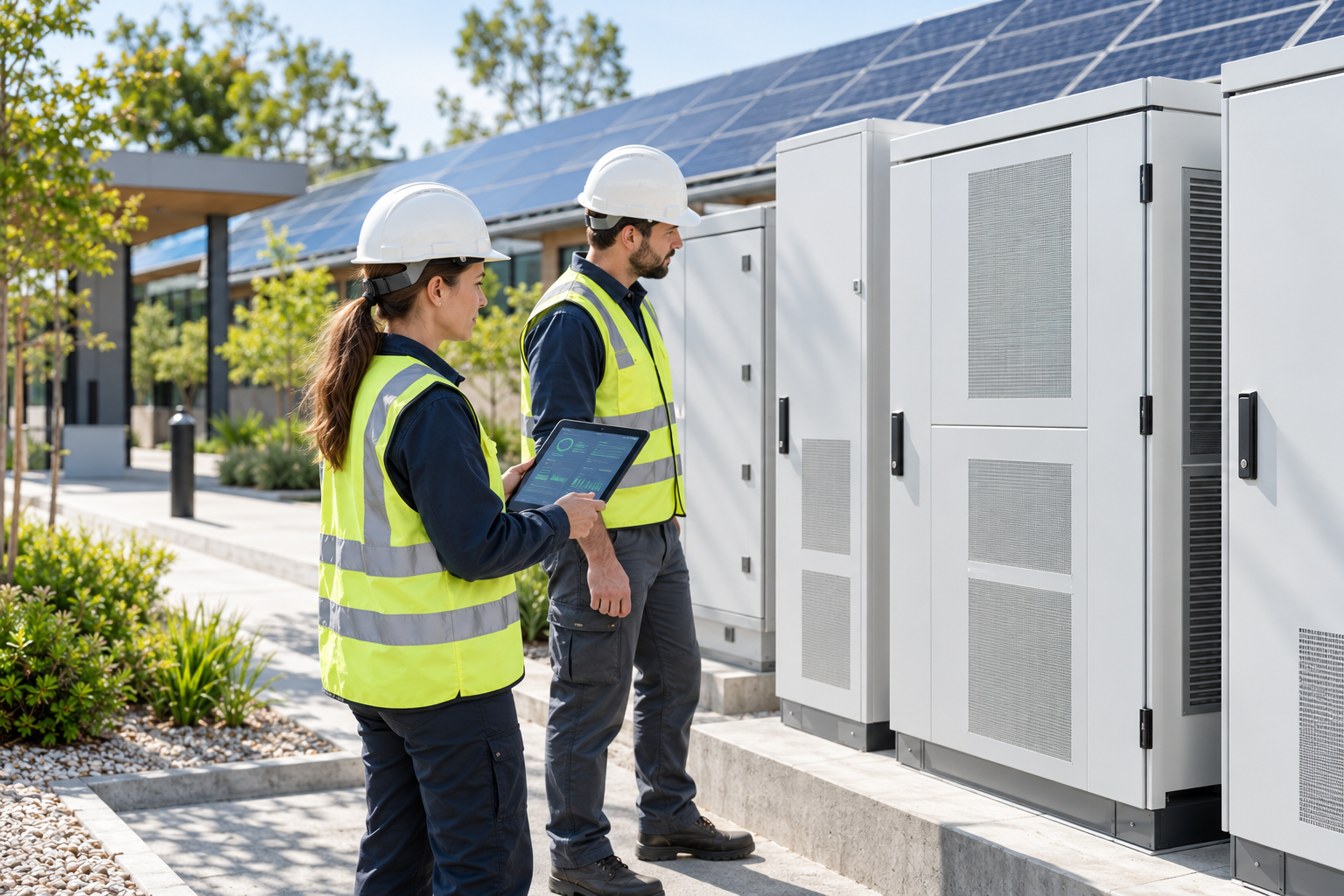
AI-generated application concept image.
Integrated monitoring & fault alerts
Collect generation, consumption, ESS and equipment status, and alert per-site anomalies — distinguishing communication faults from equipment faults.
Preventive maintenance & local response
Manage scheduled inspections, cleaning, spare parts, dispatch and action history. SLAs separate response time, on-site arrival and recovery targets.
Performance verification & reporting
Report generation, self-consumption, availability and maintenance performance against baseline loads and seasonal conditions, evaluating equipment, software and operating costs together.
10Global Markets
Three markets, one system: Ukraine, the Middle East, Central Asia
These are per-market proposal models to verify local demand. Confirmed projects and records are published separately after contracts and completions are verified.
01
Ukraine
Centred on operational continuity for schools, hospitals and key facilities. High-efficiency solar, EMS and local operation packages per facility.
Priority market · Proposal model — demand under review
02
Middle East
High-irradiance conditions with cooling-driven loads. Facility operators and local delivery partners under review.
Proposal model — demand under review
03
Central Asia
Facility energy packages adapted to continental climate and grid conditions, developed with local partners.
Proposal model — demand under review
11FAQ
Things to check before you start
Can you run a panel-only export project?
We prioritise integrated supply of high-efficiency equipment and management services. Product-only supply is reviewed when installation, compatibility and warranty conditions are confirmed — after checking the destination country, buyer, specifications, quantity, installer and warranty system.
Can existing schools, hospitals or farms adopt this?
Scope is defined after surveying existing power use, structure, grid connection, critical loads and emergency power. Schools are reviewed for operating hours and site; hospitals for load separation and emergency-power interface; smart farms for maintaining critical pump and control power and growing conditions.
How are savings and payback period calculated?
They reflect hourly power loads, local weather and electricity tariffs, installation, operation and replacement costs, and actual contract terms. We do not present fixed savings or return figures before data is verified.
Are Korean partners and overseas projects already confirmed?
This page is a business and design proposal. Companies are partnership candidates under review, and market models are at proposal stage. Only approved information is published once verifiable evidence — contracts, pilots, completions — is secured.
12AI Preliminary Review
Check energy integration for your facility
Enter your application area, country, cultivation method and key equipment. AI suggests a preliminary energy-integration review and the items to check next.
Fill in the form to receive a preliminary energy-integration review and a list of items to check next.
Start an energy project fitted to your facility and market.
Tell us your country, facility type, installation area, power usage, critical loads, existing emergency power and desired management scope. We will review the right technology and partner configuration for your project.
Phone 02-3280-3088